Home › Asphalt Resurfacing & Overlays
Refresh aging pavement with asphalt resurfacing in Corpus Christi, TX instead of a complete tear-out. We repair problem areas, clean the surface, and install a new asphalt overlay that renews appearance and performance. Ideal for driveways with a solid base, this cost-effective option delivers a like-new blacktop surface that can last for many years.
Precision Asphalt Corpus Christi provides professional asphalt resurfacing throughout Corpus Christi, TX, Texas and the surrounding area. Our licensed, insured crew delivers safe, clean, on-time work with a free estimate before anything begins. Call (361) 266-1487 or request your free quote.
Asphalt Resurfacing & Overlays in Corpus Christi That Actually Last
Asphalt resurfacing is often the most practical way to restore a worn parking lot or driveway in Corpus Christi without paying for a full tear-out and replacement. Instead of ripping everything out, we grind or clean the top layer, fix structural issues, then install a new asphalt layer on top. When it is done right, you get the look and performance of a new pave at a lower cost.
Precision Asphalt Corpus Christi focuses on whether your existing pavement is a good candidate for an overlay in the first place. Not every surface qualifies. If the base is failing or there are major drainage problems, we will explain that upfront so you are not wasting money on a resurfacing that will fail in a couple of years. If your base is sound, resurfacing is often the right call for aging apartment complexes, churches, HOAs, retail centers, and long residential driveways across Corpus Christi and the surrounding coastal areas.
How We Evaluate Your Pavement Before Resurfacing
The first step is a site visit. We walk your lot or drive and look for specific issues that affect whether an asphalt overlay will hold up in South Texas conditions. We are checking:
• Cracking patterns: A few isolated cracks are normal. Alligator cracking in wide areas usually means base failure and may require full-depth repairs before resurfacing.
• Rutting and depressions: Deep tire ruts or birdbaths tell us where subbase has shifted or compacted poorly. These spots must be milled and rebuilt, not just paved over.
• Drainage and slope: In Corpus Christi, heavy coastal rains combine with flat sites to create standing water. If water already pools, we address slope or add drainage improvements before overlaying.
• Edge strength: Broken edges along drive lanes or near dumpsters show where the pavement has been overloaded or is not supported. These areas are usually sawcut and rebuilt full-depth.
We also ask about your traffic. A shopping center with frequent delivery trucks needs a very different resurfacing design than a residential cul-de-sac or HOA walking loop. At Precision Asphalt Corpus Christi we size the overlay thickness and mix design around actual loads and turning movements instead of a one-size-fits-all approach.
What Actually Happens During an Asphalt Resurfacing Project
Once resurfacing is truly the right solution, we follow a clear sequence so you know what to expect on site.
1. Site prep and cleaning: We start with power sweeping or mechanical cleaning to remove dirt, sand, loose aggregate, and vegetation. In areas close to the bay or beachfront properties, we pay extra attention to sand that can keep new asphalt from bonding.
2. Milling or grinding high spots: Where existing asphalt is too high at transitions, curbs, or tied into city streets, we use a milling machine to remove a controlled thickness. This keeps finished elevations correct so you are not left with trip hazards or water trapped along the curb.
3. Structural patching: Any soft spots, potholes, severe alligator cracking, or failed joints are cut out and replaced with new base and asphalt. If a trash enclosure lane in a Corpus Christi apartment complex has constant truck traffic, we often install full-depth asphalt or reinforced sections in that corridor before overlaying the rest.
4. Crack repair: Larger cracks are routed or cleaned and filled with hot rubberized crack sealant. This keeps those cracks from reflecting quickly through the new overlay.
5. Tack coat application: We spray a tack coat over the existing pavement, a thin layer of asphalt emulsion that acts like glue between old and new layers. Skipping or skimping on tack is a common cause of overlay failure; we apply it at the rate recommended for the actual surface condition.
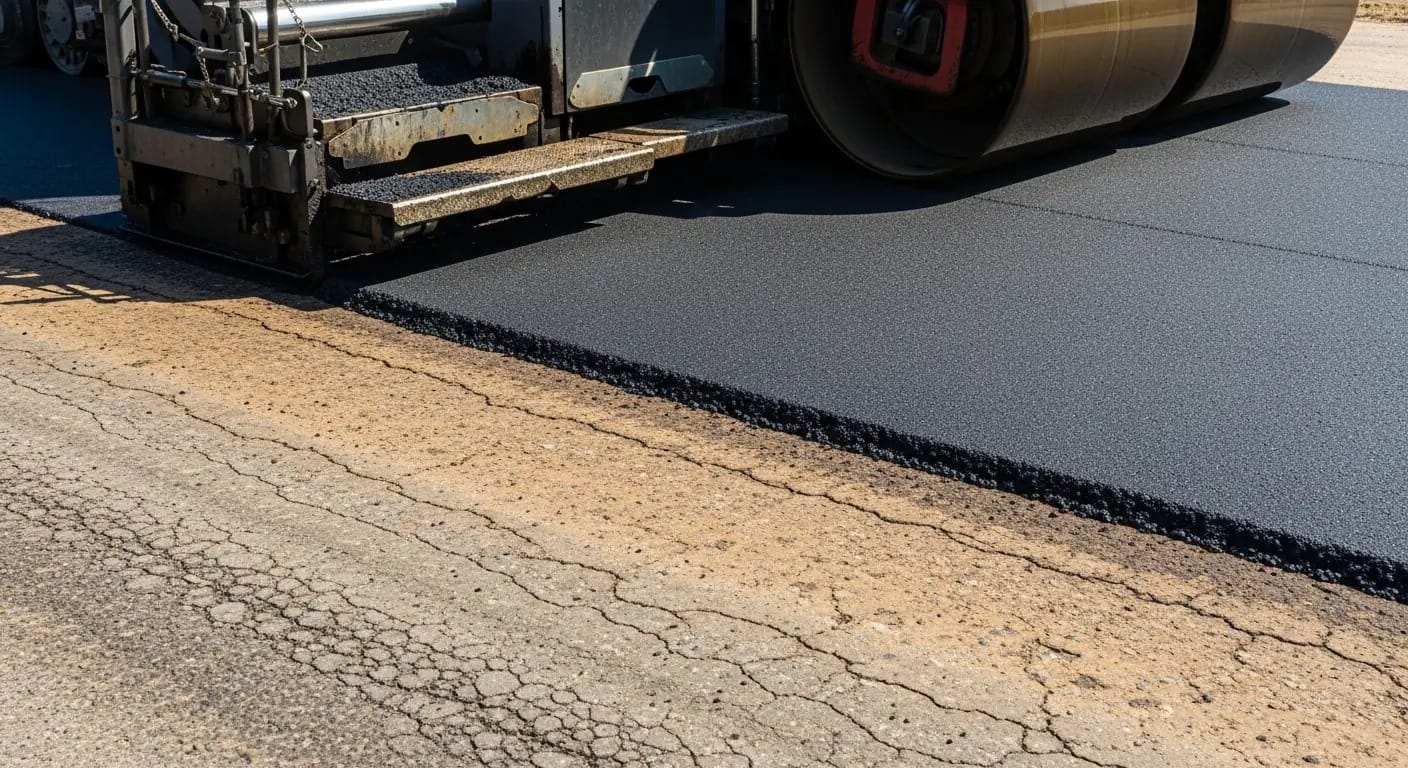
6. New asphalt overlay: The fresh surface course is laid with a paver, then compacted with steel and pneumatic rollers at the proper temperatures. In Corpus Christi heat, mix temperature and timing are critical, since asphalt cools slower and can be overworked if the crew does not pay attention.
7. Striping and markings: After the mat cools, we restripe stalls, ADA spaces, fire lanes, and any stenciling according to local codes and your site layout. For HOAs and churches we can also adjust layouts to improve traffic flow and add loading or rideshare zones if requested.
Material Choices, Thickness, and What Drives Cost
Not all overlays are the same. Precision Asphalt Corpus Christi will recommend specific thickness and mix options so you understand where your money is going.
Thickness: Typical asphalt resurfacing for light duty parking areas in Corpus Christi ranges from 1.5 to 2 inches compacted. Heavier truck lanes, drive-thru loops with tight turning, and industrial yards may require 2 to 3 inches or even multiple lifts. A too-thin overlay on a stressed surface usually cracks or ruts quickly, so we do not recommend shaving thickness just to hit a low price.
Mix design: For most projects we use a hot mix asphalt designed for local climate and traffic, not a generic patch mix. For high temperature and high UV exposure near the coast, we often choose mixes with a good balance of stiffness and flexibility, so they resist rutting without becoming brittle.
Cost drivers: Your price per square foot will depend on:
• Total area and layout complexity (small or chopped up areas often cost more per square foot than large open lots).
• Amount of milling and base repair required.
• Overlay thickness and mix type.
• Access constraints (working around business hours at a medical office or school may require phasing and traffic control).
• Striping and any added features like speed humps, wheel stops, or signage.
We keep pricing transparent. After a site visit, Precision Asphalt Corpus Christi provides a breakdown so you can see how much relates to prep work, asphalt, and markings instead of a single lump number with no explanation.
Local Conditions, Codes, and Practical Issues in Corpus Christi
Paving on the Texas coast comes with specific challenges that affect resurfacing outcomes.
Moisture and drainage: Corpus Christi sees heavy rains, humidity, and occasional tropical events. Before overlaying, we evaluate how water crosses your site and where it collects. Sometimes a simple milling pass along the curb line or adding a valley gutter can make the difference between a long-lasting overlay and one that strips or ravels from constant ponding.
Soils and base: Many local properties have sandy or silty subgrades that shift if not compacted and drained well. Where we find pumping or movement, we will recommend base stabilization or undercutting in problem zones before an overlay goes down.
Permits and codes: For most private parking lots, resurfacing alone does not trigger a City of Corpus Christi building permit, but changes to drive approaches that tie into public streets may. If your project includes modifying entrances, we coordinate with local standards and advise when a permit or city review is needed. ADA compliance is another critical point. When we resurface and restripe, we can adjust accessible parking, cross slopes, and ramp locations so they align with current ADA guidelines, which reduces your risk during future inspections or insurance reviews.
HOAs and property management: Many Corpus Christi HOAs, shopping centers, and office parks have rules about work hours, noise, and access. We can stage resurfacing in sections so residents still have a way in and out, or keep fire lanes open while we work. We also provide clear timelines so property managers can notify tenants, post temporary signage, and schedule towing or deliveries around the work.
Common Overlay Problems and How We Prevent Them
Most overlay failures are not bad luck. They usually come from skipping steps or ignoring what the existing pavement is telling you.
Reflective cracking: If cracks in the old pavement are not treated correctly, they reappear through the new overlay. Our approach is to identify which cracks are from movement or base failure and either repair the area full-depth or use proper crack sealing before the overlay.
Slippage and shoving: This happens when the new layer was never truly bonded to the old one. You will see waves or ripples in front of stop bars or at tight corners. Precision Asphalt Corpus Christi mitigates this with full coverage tack coat and correct rolling patterns.
Raveling and early wear: On the coast, salt exposure and high temperatures speed up aging of low quality asphalt mixes. We avoid bargain-bin mixes for overlays and compact at the right density so aggregate is locked in tightly.
Poor transitions: High or low transitions at garages, sidewalks, and entrances lead to trip hazards and water traps. Before we resurface, we evaluate each interface point, decide where to mill, and set final grades so you have smooth roll-ins and walk-ups.
Before you hire any contractor for asphalt resurfacing in Corpus Christi, ask them exactly how they will handle milling, crack repair, tack coat, and drainage. If you would rather hear a clear plan than a sales pitch, Precision Asphalt Corpus Christi is ready to walk your site and explain what it really needs.